Introducing the basics of agriculture
Press-centre / News,
This spring, EkoNiva launched Agrischool: from Field to Shop Shelf, a one-of-a-kind educational programme. According to the authors, the Group’s tour project specialists, it aims to showcase the farming sector in the most engaging and realistic way possible.
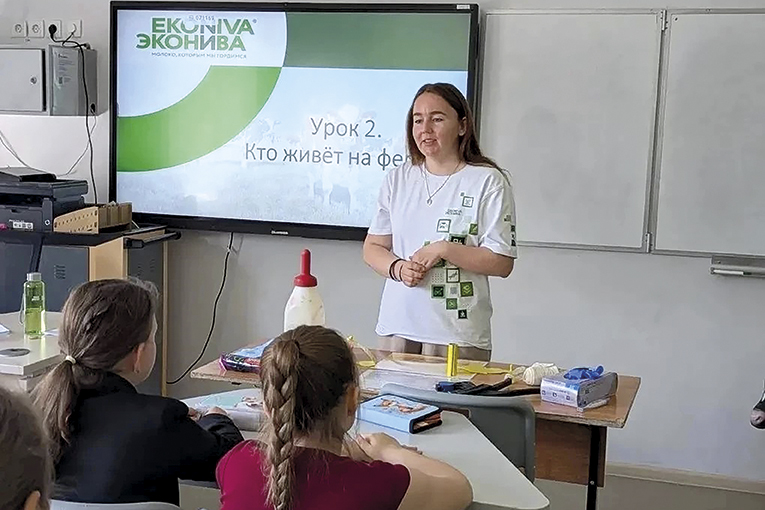
The first participants were pupils from two schools – in Zaluzhnoye village and Liski town. Agrischool lessons involved discussions, trials, interactive meetings and practicals. From day one, it was clear that the class format is effective: the pupils joined in the conversation, asking questions, debating, testing theories and reaching conclusions.
The project ensures an individual approach to each age group. The primary school pupils did play-based practical tasks such as planting seeds, assembling mock-ups of farms and learning how to tag calves using models.
For the grades 5-7, it was proposed to engage in research activities: determining soil acidity, studying photosynthesis and doing milk coagulation tests. Tasting sessions of dairy products evolved into an analysis of quality criteria – it was no longer a game but an applied problem.
The high schoolers learnt about the key professions in the agricultural sector: veterinarians, herd managers, plant breeders and many others, as well as about production economics: price and cost formation and the effects of technology and logistics on the overall performance. The children could see that farming is not associated with field works alone – it is a complex industry.
The teachers were pleased that the participants did not just listen – they interacted actively. Later, photos and videos from the classes appeared on social media, which means the children were eager to share their impressions and the programme resonated strongly with them.
‘We strived to create something unique for the pupils, so the lessons weren’t like regular ones. Along with memorising information, the children were to find out how everything actually works in agriculture’, notes Natalya Tarasova, EkoNiva’s tour project specialist, a co-author of the programme.
The spring experiment was a success, and Agrischool was continued in the summer. Its team members visited 14 school‑based camps and the Raketa recreation camp, thus expanding the project’s geographical reach to four districts: Liski, Anna, Bobrov and Buturlinovka.
Instead of 45‑minute lessons, there were 2‑hour meetings comprising quizzes, tests and team competitions in addition to the educational part. The pupils came up with ideas for farms of the future, presented their own ‘business projects’ and looked for out-of-the-box solutions.
The Raketa camp hosted a space-themed quest. The pupils ‘launched a rocket’ and ‘delivered’ EkoNiva’s products to other planets. The game was crowned with a dance flashmob and a treat from the company.
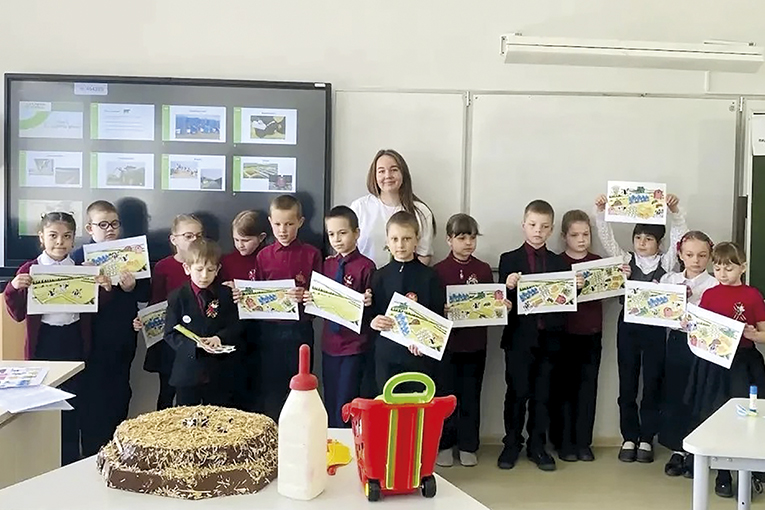
‘Our goal was to show the children that today’s agriculture is not just about cultivating fields – it is a modern industry with IT technologies, robots, skilled employees, excellent working conditions and a well‑balanced economy. The project exceeded our expectations, receiving a sincere and lively response’, shares Roman Volodin, First Deputy Regional Director at EkoNiva’s Voronezh Subdivision. ‘We hope to help pupils realise that a career in farming can be a promising one for them. They don’t need to move to big cities to be successful. They can work productively for the benefit of their homeland, for which all the conditions have been created.’
Agrischool completed its first season. The project has every resource it needs for growth: a methodological base, experience and, most importantly, children’s interest. The authors have various development options in mind. However, it is already obvious: the key to efficient training is not just tedious theory – it is essential to give pupils the opportunity to see the agricultural sector from the inside, to let them immerse themselves in it.